

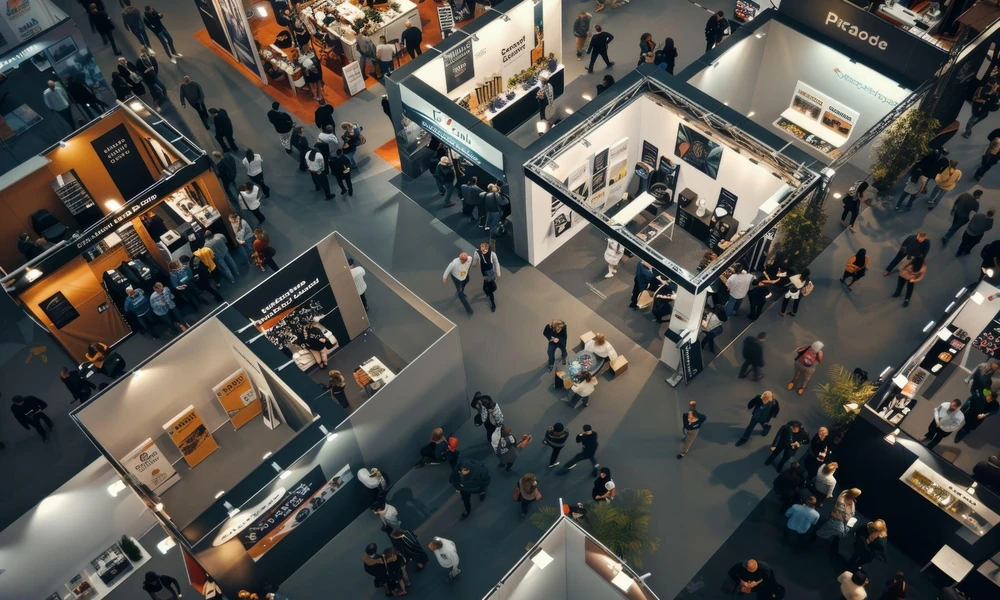
Attendee numbers influence almost every part of event planning. Venue capacity, registration, catering, staffing, technology, security and crowd movement all need to be considered in relation to the expected number of participants.
An event for 50 people can often rely on relatively simple processes and direct communication. At 500 or 5,000 attendees, end-to-end event management involves more coordination between venues, suppliers, production teams and other parties.
Planning should therefore scale with the size and complexity of the event rather than simply increasing quantities.
How Should You Plan an Event for 50 Attendees?
An event for 50 attendees is relatively small, which can make communication and logistics easier to manage. Examples may include corporate meetings, workshops, training sessions, networking events and private company functions.
Venue selection should consider the planned format rather than capacity alone. A seated presentation, workshop and networking reception can each require different layouts even with the same number of guests.
Important considerations include:
- Registration: A simple guest list, digital registration system or staffed check-in point may be sufficient.
- Seating: Layouts can be arranged according to presentations, discussions or group activities.
- Catering: Meal quantities can be planned using confirmed attendance and dietary information.
- Technology: Requirements may include microphones, presentation screens, projectors and internet access.
- Staffing: Responsibilities should be assigned for registration, venue coordination, speakers and catering.
- Accessibility: Entrances, seating and facilities should accommodate attendees with accessibility requirements.
With fewer participants, changes can generally be communicated through a smaller operational team. However, schedules, responsibilities and contingency arrangements should still be documented.
The main focus at this scale is ensuring that the venue, programme and supporting services match the purpose of the event.
How Should You Plan an Event for 500 Attendees?
At 500 attendees, event operations require more structured coordination. Registration queues, catering service, seating movements and programme transitions can affect hundreds of people simultaneously.
This is where corporate event management typically requires clearer division of responsibilities between internal teams, venue staff and external suppliers. A detailed event schedule can help coordinate these groups.
Planning considerations may include:
- Venue capacity and layout: Allow sufficient space for the main programme, catering, registration and circulation.
- Registration: Multiple check-in points or digital systems can help process arrivals.
- Catering: Service locations and meal schedules should account for attendee flow as well as food quantities.
- AV production: Larger rooms may require suitable sound reinforcement, screens, lighting and technical support.
- Staff communication: Teams need defined roles and reliable methods of communicating during the event.
- Crowd movement: Entrances, exits, corridors and programme transitions should be considered when developing the layout.
- Contingency planning: Alternative arrangements should address relevant operational disruptions.
Compared with a 50-person event, a 500-person event involves more dependencies. A delay in registration, catering or programme delivery can affect a much larger group.
Planning therefore shifts from managing individual activities towards coordinating several connected event functions.
How Should You Plan an Event for 5,000 Attendees?
An event for 5,000 attendees requires large-scale operational planning. Conferences, exhibitions and major corporate gatherings at this size can involve multiple spaces, entrances, suppliers and operational teams.
Venue capacity remains fundamental, but organisers must also consider how thousands of people enter, move through and leave the site. Applicable venue rules, local requirements and emergency procedures must also be incorporated into planning.
Key areas include:
- attendee registration and access control
- entry and exit routes
- crowd movement and queue management
- security and emergency procedures
- first aid or medical arrangements
- large-scale catering and refreshment points
- toilets and other attendee facilities
- transport, parking and drop-off arrangements
- AV, staging, lighting and power requirements
- communication between operational teams
- contingency procedures for foreseeable disruptions
At this scale, end-to-end event management can involve coordinating many interconnected workstreams from planning through event-day operations and post-event activities. Responsibilities and escalation procedures need to be clearly established.
The main difference is operational scale: decisions must account for how systems perform when used by thousands of attendees rather than individuals or small groups.
What Are the Main Planning Differences Between Events for 50, 500 and 5,000 Attendees?
The core planning areas remain similar, but their complexity increases with attendance.
| Planning area | 50 attendees | 500 attendees | 5,000 attendees |
| Registration | Simple check-in | Multiple check-in processes | Scalable access and registration systems |
| Staffing | Small team | Defined operational teams | Multiple coordinated teams |
| Catering | Small-group service | High-volume service | Multiple large-scale service points |
| AV | Basic presentation setup | Larger production system | Large-scale technical infrastructure |
| Crowd flow | Limited | Structured movement | Detailed crowd and queue planning |
| Contingencies | Basic operational plans | Formal coordination | Multi-team response procedures |
Effective corporate event management therefore involves adjusting systems, staffing and coordination to the expected attendance. Larger numbers increase the importance of capacity planning, communication and clearly documented procedures.
Visit Event Buddy to build a corporate event management plan designed around the event you are actually delivering.
About Author

